319 Creates Episode 3: Fred Kenyon

On episode 3 I talk with Fred Kenyon from Tinyhands. Also, the podcast is now up on Apple Podcasts, Spotify, Stitcher and SoundCloud so you can now subscribe!

319 Creates Episode 3: Fred Kenyon, Milwaukee musician

Podcast Transcription

Mike Weber: Welcome back to 319 Creates. I’m your host, Mike Weber. On this episode, I am speaking with Fred Kenyon of tinyhands about their music and the politics that influence it. We talk about being homeless, protesting, and issues in the LGBTQ+ community. I hope you enjoy.

 Fred Kenyon, welcome to 319 Creates.

Fred Kenyon: Thank you. I’m happy to be here. 

Mike Weber: So I know that you’ve recently been working on your project, tinyhands. You want to tell us a little bit about that and how that got started? 

Fred Kenyon: So tinyhands was originally just a name that I went by. I was working as a freelance horticultural manicurist, which is a very fancy way to say pot trimmer.

One of the farms I worked on, my hands were too small to fit in any of the gloves. And one of the other trimmers who had a night job in a warehouse, brought a giant box full of extra small gloves so that I could wear gloves while I was working. And the grower of the medicinal farm would say, “How are those gloves fitting, tinyhands? Did you make a pound yet, tinyhands?” So that kinda just stuck. At the time, if I wasn’t trimming, I was traveling and busking. Most people who live a lifestyle where they don’t have an address – they don’t go by their legal name. They don’t introduce themselves as their legal name. So I just started going by tinyhands.

But tinyhands became a duet when I came back to Iowa for a month or so. I was making recordings with my friend Jay and Jay wanted to add parts. They would said “Oh, I’m going to do this. I’m going to make this for the recording.” And I was just like, “Do you want to be in a band? Do you want to make this a thing?” So, that’s how it got started.

Mike Weber: So why don’t you tell us a little bit about the music then? 

Fred Kenyon: A lot of our songs are kind of raunchy or dirty. Again, that dates back to when most of them were written, and when I first started really performing, which was when I was busking. I learned that I could make a lot of money if I sat on a street corner and sang about eating ass. There was one time where I was singing a song I wrote that is called “Eating Ass: A Love Song“. This man walked by with his family and they were all just kind of blushing. He rushes his wife and kids into the car. Then he gets in the car and he opens the door and comes out and hands me a 20, and he says thank you. So yeah, I guess people like to hear it. 

Mike Weber: So now I’m going to ask you, because you keep using the term busking, and I’m not exactly sure what that means. (Busking example video)

Fred Kenyon: Oh, you see it happen sometimes in Iowa City. I feel like the laws in Iowa City are more strict, so it depends on where you are. There’s some places where you’ll see a lot of buskers and some are just here and there. But that’s a street musician. 

Mike Weber: Oh, okay. 

Fred Kenyon: Yeah. And you play for tips. And if I wasn’t trimming, that’s how I ate. 

Mike Weber: That makes sense. And you were mentioning how for a while you were living kind of without an address. Were you still in one relative location or were you just kind of traveling around?

Fred Kenyon: I stayed on the West Coast. I didn’t really leave the West Coast when I didn’t have an address. Primarily in Oregon because that’s where a lot of the work was. I started out with a van and I lived in the van and I had a pet rat and he crawled in the motor of the van and did horrible things to it, and the van didn’t work anymore. Then I got another van, which… the motor seized after two weeks. After that I started living on foot with a backpack for awhile. 

Mike Weber: What was that experience like for you? What do you feel like your big takeaway from doing that was? 

Fred Kenyon: I realized that people who have never really been homeless don’t always understand what it’s like. And I feel like a lot of people have a lot of preconceived notions. Like you see someone that’s panhandling and think, “Oh, that’s just a beggar. He’s lazy, she’s lazy. They don’t want to work. They’re addicted to drugs. If I give them money, they’re just going to spend it on beer.” It’s like, first off, they might spend it on beer, but if you’re sleeping in a pile of gravel underneath the bridge, you might need a Steel Reserve to fall asleep.

So unless you have a sedative or a place for them to stay… shut up Karen. For me, living in a van was completely different than being on foot because in a van I still had a space that I could go, shut the door and lock it, and people couldn’t come in or bother me.

Whereas when you’re on foot and you’re living out of your backpack, you have no safe place to go, no privacy. At any point in time, anybody could come up to you and talk to you and you don’t have any downtime ever. That’s another thing, people view homeless people as being lazy because they’re sitting there and they’re drinking. You’re going to go home and shut the door and drink.

So, people see you very differently. And some people are very, very kind to you and they recognize that you’re just doing your best and they want to help you. Or if they can’t help you, they’re at least friendly to you because they see you as a person. But a lot of people aren’t, and they’re cruel and they’re mean. I have had the cops called on me just for existing and a lot of people experienced that, every day. Wrong place. Wrong time.

Mike Weber: I feel like a lot of people who treat homeless people that way… To them, they only identify someone as being homeless when the person is doing something that they would do behind a closed door. 

Fred Kenyon: Yeah.

Mike Weber: And it’s really easy for us to think, “Well, if you’re sitting out here in public drinking and you’re homeless…” You’re making your own bed, as it were. And, I think that’s wrong. I think, as people, we tend to judge others for things that they ultimately have no control over. We don’t know why they’re homeless. Did they make wrong decisions? Maybe, but we don’t know. We shouldn’t make those determinations. And we should be kind and gentle to everyone around us. And I think it’s valuable to have the perspective that you have and to share that with other people – especially people who are the type that might make those kinds of assumptions, if that makes sense. 

Fred Kenyon: Yeah. I am not proud of getting in a Facebook argument with anyone over this, but there was somebody really shit talking homeless people in general, and I was just like, “Hey, you shouldn’t say that.”

And their response was, “Have you even met a real homeless person?” I was like, “Yeah, maybe several hundred.” That person kind of went off on me and said, “Well, you must have made a bunch of horrible life decisions. I’m sorry you suck at life.” And I’m just like, “You know, just because someone’s homeless or in a transitional period in their life, doesn’t mean they did something horrible to get there.”

Mike Weber: Well, I look at it from this standpoint. All of us, unless we come from a lot of privilege, we’re only a couple mistakes away from homelessness. 

Fred Kenyon: Yeah.

Mike Weber: I look at it this way. I have a house. I have a job. What happens if I walk into work tomorrow and they’re like, “Yeah, we’re closing shop and we’re going out of business.” Then I don’t have a job. What happens if I can’t find a job that can pay my mortgage? Within a few months I can be on the street. I don’t think that it is our place to judge other people, and we should not be making these decisions for them. Ultimately, why do you care?

Anytime that I see a person that needs help or can be helped, the first thing to go through my head shouldn’t be “What did this person do wrong?” First thing that goes through my head is, “Is there anything I can do to help?”

Fred Kenyon: Yeah. And you know, if you see someone that’s panhandling or busking and you don’t have anything to give them, you’re not a bad person for that. I think people get really defensive, like, “Well, I can’t give them this.” Okay, don’t. Just be pleasant. Just respect them and move on. Most people who are traveling or houseless don’t feel like you owe them something. They’re just out there being like, “Hey, here I am. If you can help, great.”

Mike Weber: Well, I think a lot of these people that are rude, that do say those things, are the type of people that view it from the standpoint of, “Well, no one helped me.” And, as a person that’s worked in retail for 13, 14 years now… They’re the same type of people that when encountering a retail worker will treat them like the lowest form of life on earth. And it’s like, why? Why do you feel the need to judge other people’s lives? Because they don’t have what you have and it’s just disgusting. 

Fred Kenyon: Yeah, that’s true. 

Mike Weber: I think a lot of that comes back to that preconceived notion that homeless people are lesser, that they have made some type of mistakes. All of those things that you pointed out, there’s the assumption that if you don’t have it, there’s a reason that you don’t. If you don’t have a good job, it’s because you’re not a hard worker. If you’re homeless, it’s because you’ve made mistakes. If you don’t have good references, it’s because you’re a bad person. 

Fred Kenyon: Yeah.

Mike Weber: And, all of that comes back to what I keep saying. That as people, we have this tendency to judge people on face value. We will focus in on these one or two characteristics that we put so much value on, that really don’t matter in the large scheme of things.

I know so many good people, people that would give you the shirt off their back that have a credit score of 450. It’s like, who cares?

Fred Kenyon: I have a credit score of like 2.

Mike Weber: 2? Wow. That’s impressive. 

Fred Kenyon: Yeah, it’s bad. 

Mike Weber: But, to me, it’s just one of those things. Everybody has something to offer. If we want to sit here and pretend that we live in a society, in a community, we have to accept that everybody has a role to play in that. And everybody has something unique to bring to the table. When we are forcing people into a cycle where they are stuck, either being homeless or stuck renting in a bad part of the city…to a certain extent, when we put these limitations on people because we think they’re going to fail, we’re just setting them up to fail. 

So, let’s talk about your music again. You brought some instruments with you today.

Fred Kenyon: Yep. 

Mike Weber: Did you want to play a song for us? 

Fred Kenyon: Sure.

Mike Weber: Why don’t you tell us what you’re gonna play. 

Fred Kenyon: I’m gonna play a song called, “Should I Tell My Dog That He’s Adopted?” It’s a song I wrote about flag burning and a lot of people get really up in arms when the topic of flag burning comes up because they think, “Oh, you hate America.” Most people I’ve met who have participated in a protest such as flag burning, actually don’t hate America. They are burning the flag as a symbolism for rebirth or renewal, like a Phoenix rising from the flames.

And most people I’ve met – and I can’t speak for everyone – but most people I’ve met who protest actually love their country and they love that they’re here, but they want things to change. So the song itself isn’t talking about any particular thing to be protesting, but the overall message is if you are more upset about somebody protesting than you are about why they’re protesting, you got a problem.

Mike Weber: Well, let’s take a break and listen to that. And I have a feeling we’re going to have a conversation about that too.

You can listen to “Should I Tell My Dog That He’s Adopted?” on Bandcamp.

So it sounds like you have some opinions on flag burning.

Fred Kenyon: Maybe a little. 

Mike Weber: Well, I think the song is really good and I think that the message in it is something that’s actually really important to talk about and ties into a little bit of what we’ve already been talking about. I think you have a really good point that the people that get upset about flag burning aren’t really upset about flag burning. It’s just a vehicle for their visceral hatred for everything, not “American.” 

Fred Kenyon: Well, it’s not even flag burning. I’ve attended many protests in my life and even when it’s been completely like no fire involved, people have still been very combative and have shouted and threatened. In my song, I have a line that says, “Should I tell my dog to get a job?” Like they say to you when you go to a protest. People say, “Oh, get a job.” It’s like, I have a job. I protested outside the Trump rally in January of 2016. And that was just like the most commonly thing they said. “Get a job, get a job.” I work full-time. 

Mike Weber: Yeah, I remember during the election… I try very hard to have positive engagement, if that’s the word we want to use, with people of different opinions than myself. A lot of the conversations ended up happening with people that were supporting Hillary instead of Bernie. Those were typically more productive. But anytime that I encountered somebody, especially during the primary season, that was like, “Yeah, Trump.” And I thought, “Whoa, hang on a second.” I was a Bernie supporter. I’m really weird because there are a lot of things that I’m more center on, but I was still a Bernie guy. There are things that I’m very left-progressive/socialist on. But also a lot of things I think there’s ground in between the GOP and the Democrats on. I can understand supporting a candidate, like Mitt Romney or John McCain, or even George W., but Trump was just something else entirely.

The people that I’ve encountered that just… there was not a conversation to be had. It was instantly, “If you’re not supporting the God emperor, you hate America.” And there was this time when, if you are not a Trump supporter, they think you don’t have a job. You don’t like America. You think America should be ran by Muslims or something crazy like that. There wasn’t a gradient of their support. You guys come off as bat shit crazy.

Fred Kenyon: Well, even if for some reason you didn’t have a job, like we were speaking earlier about – people that were traveling or houseless. That doesn’t mean that you shouldn’t have an opinion that reflects what you want to see happen in this country. Having a job doesn’t make you a valuable human necessarily. 

Mike Weber: My wife and I talk about politics a lot and one thing that we have, the terminology that we use a lot is “I got mine. So fuck you.” And we know people who were working minimum wage jobs, not full time, people that a lot of the ideas of candidates like Bernie Sanders would have propped up. People who have “pulled themselves up by their bootstraps” and are now working a “real job” making $12 an hour and they feel like they’ve accomplished something. And I don’t want to discount that. I think that anybody who makes any type of progress up the “social ladder” or whatever terminology you want to use. You had a shitty job, you have a better job now. You did something to get there and you should feel proud of that. That being said, it’s not like you’ve gotten far enough that the ideas of a Bernie Sanders… those policies would still prop you up. You are still in a position to benefit from the ideas of the progressive left. But beyond that… Have you completely forgot what it was like to not have a full time job and not be able to find a full time job and not be able to have a job that pays more than eight bucks an hour? I feel like you are a prime candidate of somebody who should be like, we need to have this kind of change in America. I remember what that was like, and that was terrible. When I met my wife, she was unemployed. She had just finished college and could not find a job. It wasn’t even that she couldn’t find a job in her field – she could not find any real work. Even minimum wage jobs were telling her they can give like 10 hours a week.

And it was just like, well, that helps, but that’s 10 hours a week that I can’t spend looking for a better job.

Fred Kenyon: Yeah and she’s getting paid seven buck an hour. $70 a week. Woo. Before taxes. 

Mike Weber: At the time I was making just over minimum wage and it was a full time job. But, we remember what that’s like. That was six years ago now. But that’s not a distant memory to me. That was one of the roughest periods of my life. If the world was a bit more progressive, I don’t think that would have been as difficult as it was. There’s no reason that we need to make that hard for people, and there’s no reason that should be hard for people. And there’s no reason that these Trump supporters should feel like, “Well, if you’re not supporting these ideas, you are probably one of the dregs of society that the God emperor tells us to hate.” And the connection between that – if you don’t support my ideas, you are not only oppositional to me, but you are my enemy and I will do everything in my power to cripple you. I think that’s the big thing. When they go to their rallies and they see people protesting the rallies, they are the personification of everything that they are told to hate. And I think that’s where that comes from. 

Fred Kenyon: Some of the shit that the supporters were saying to us while we were protesting… One of the chants – there was a group that was there protesting with us that was showing support for Muslim Americans – we were saying “We stand with our Muslim neighbors.” And one of the Trump supporters – he took a video of him and me going at it and it got on the internet. Someone found this video with me in it and sent it to me. But he kept saying, “Yeah, support the Muslims until they bomb the shit out of you.” Do you think that everyone who practices a religion is going to be violent to you? This is a very peaceful religion that you probably have not taken more than two seconds to even get acquainted with. 

Mike Weber: That just blows my mind. I am not religious at all. And I’m one of those people that overall thinks religion in the world hurts it more than it helps it.

But when we talk about the protests… these people are saying things like, “You hate America because you didn’t support Donald Trump or you hate America because you’re out here protesting.” When I stop and I think about it – to me, protesting is probably the most American thing that a human being can do.

There’s nothing more American than utilizing your voice of dissent. That is literally what our country was founded on. Our country was founded out of dissent when we did not have a representative voice over in the UK. We were being taxed and the entire founding of this country was out of us not having a voice. When a citizen utilizes these rights – or not even necessarily a citizen because the Bill of Rights does not say these rights are exclusive to citizens of the country – it says these are inalienable rights to every person and for these chest pounding Americans to say that us utilizing that very basic right makes us un-American is incredibly hypocritical.

Fred Kenyon: Yeah. Well, this country was also founded on colonization and stealing land from people who already lived here. But after that already happened. Well, we declared independence. Yeah. 

Mike Weber: And that’s the other thing. A lot of Trump’s message was anti-immigration. Again, that’s one of those things that I kind of cocked my head at. It’s like, how aware are you of the history of this country? 

Fred Kenyon: Yeah. This isn’t even our land.

Mike Weber: I’m going to toss one out here because this is one that really annoys me – the people that argue it’s okay to take pride in your race unless you’re white. Let’s unpack this for a second. Number one: white is not a race. It is a skin color. Number two: you are more than likely a mutt at this point. If your ancestors have been in America for more than a couple generations, you’ve been distilled down to nothingness. You don’t have a race to be proud of. And we are a country that was founded by people coming in, literally murdering people, and stealing their land. What are you proud of? What are you trying to pound your chest about? There’s nothing there. You are a citizen of America. Congratulations. You were born here. It’s fine. 

Fred Kenyon: I want to show you something since we’re talking about pride. It’s kind of taking a step away from race and toward another issue since it is Pride Month here, or it’s Pride Month at the time that we’re recording this. So there’s this t-shirt I found a picture of online. It has a picture of a rooster and then a plus sign, and then a cat, and then an equal sign, and then a baby. And it says straight pride. And I’m not exactly sure that’s how babies are made. Like you put the rooster and the cat together?

Mike Weber: Well, I’m pretty sure they’re going for another word for both of those animals. 

Fred Kenyon: I know. It’s just… straight pride. Woo. 

Mike Weber: Yeah. I think that a lot of – I’m just going to just start referring to people as normies – a lot of normal people feel left out when people have something that they can take pride in. Well if you’re proud of being gay, then I’m proud of being straight. 

Fred Kenyon: Good for you. Great. 

Mike Weber: Again, when you have something that is the norm. I don’t think… 

Fred Kenyon: Well, straight people haven’t been persecuted and executed.

Mike Weber: Nope.

Fred Kenyon: Sent to mental institutions. Forced to go through therapy, been jumped, beat up, you know, like straight people don’t… You can walk down the street holding hands with your partner and not be worried about somebody yelling at you or throwing something at you because you’re straight. I think that any given person can be proud of themselves. Like you mentioned, you’re proud of your photography. Someone could be proud of their relationship. If it’s a heterosexual relationship, they could love their partner and be proud of that. And there’s nothing wrong with that. But to, especially at a time where queer people – the LGBT community is having Pride Month and saying we’re proud of ourselves and we’re here and this is who we are. And then someone would be like, “Well, I got straight pride.” You want a cookie or what?

Mike Weber: Both of the things that we’re talking about right now about white pride and straight pride. I think a lot of people who do say these things are conscious of it. It is an effort to take the air out of the room. It is an effort to put a little bit less emphasis on the things that actually merit the pride. When we’re talking about Pride Month, when people are pounding their chest and saying, “I’m proud to be a heterosexual. I’m proud that I’m straight.” All that’s doing is trying to take a little bit of the emphasis away from the community. I think that’s incredibly selfish. I mean, that’s the easiest way that I can put it. I look at it from the standpoint of these people deserve their Pride Month. They deserve to have their moment to be out there, clearly visible. And it is our responsibility as good citizens to give them their space.

They have been prosecuted, they have been murdered. And many other things. And we’re finally starting to get to a point as a society where they can walk down the street holding hands with their partner and not have the cops called on them.

Fred Kenyon: And there are still people in this country that are rooting and working against that.

They want to overturn same sex marriage. Trans people face an awful lot of discourse in this country. I wrote a song about it and the line ended up being the title of our album that just came out. It’s called “I never knew that taking a shit could be so sexual” and it is directly referring to this debate over whether or not people should use the bathroom that they feel comfortable in. It’s all of a sudden an issue of sexuality and safety. It’s a toilet.

Mike Weber: When that conversation hit the mainstream, was that about three years ago? I think it was 2015 when, I can’t remember what state it was, passed the first bathroom bill. That started a national conversation about it.

I remember sitting there and being incredibly confused by the whole idea. Maybe this was coming from me being a more liberal progressive person. First off, a lot of these people you would not know are transitioning unless they told you. By the time a lot of these people start using the bathroom that they identify with, they are already passing. And you wouldn’t even know. That aside, people have been gay for decades.

Fred Kenyon: Centuries. Thousands of years. It’s always been a thing. 

Mike Weber: Well centuries, yeah. More than likely if you’re a dude, you probably took a piss next to a guy that was gay. If you’re a girl, you probably were sitting in a stall next to somebody that was a lesbian.

Their sexual orientation does not make them a predator.

Fred Kenyon: I kind of want to jump in here. Sexual orientation and gender identity are kind of two completely different things. 

Mike Weber: Well, yes. My point with this is the whole national conversation about the reasons behind the bathroom bill. Their argument, not my argument, was that if we allow trans people into bathrooms, they’re going to assault somebody. They’re going to assault a kid. It was all about trans women. We’re going to have a trans woman, who they perceive as still being a man, in a bathroom with little girls and they’re going to rape them. 

And that’s not the way this works. My point relating it to sexual orientation – if putting two people into a bathroom who are compatible sexually is going to result in assault, we would have had that problem with gay people.

Fred Kenyon: Yeah.

Mike Weber: That’s the point I was trying to make.

Fred Kenyon: Yes. No, that’s a good point. I just wanted to throw that out there. There’s another word you used – and I’m not coming at you, like you said something horrible. I think a lot of people use this word and don’t realize the problematic-ness of it. But you said “passing”. Again, I’m not coming at you, I don’t think you were trying to be hurtful in any way. I personally feel like passing can be a very problematic way to put it, because there’s a lot of people that are trans and don’t have access to the medical treatment, or for various different reasons, don’t present with that gender. And so they’re not passing. I think that’s kind of playing into – there’s a cis look, and then there’s a trans look. And there’s someone who is a trans woman presenting as a woman, but you still look at that person and can tell they’re trans.

To say they’re not passing could be perceived as invalidating their transness. We could get into people that are non-binary, or gender queer in the middle. What does passing even mean for them if they’re in between genders?

Mike Weber: I completely agree with that and it was just the best word that I thought to use.

Fred Kenyon: Oh, no. I understand. And I only bring it up for the sake of discussion about what that word means. 

Mike Weber: I think that actually gives us another interesting talking point. Again, as a society, we try and put people into boxes. I perceive society as slowly evolving. I think we really need to get to a point where we don’t have to think about it. You mentioned a couple of different terms. Are all of these necessary or can we get to a point where we don’t have to think about it? One of the things that I’ve thought about recently is that we’ll talk about gender identity and, how does that play into why, if you identify as a woman, do you have to look like a stereotypical woman?

Fred Kenyon: Mhmm.

Mike Weber: It’s not just that you can identify as a woman, but you have to be this typical feminine woman. Why can’t you identify as a masculine woman? And, I think overall we need to kind of realign what we define – really we need to get rid of our preconceived notions of gender and gender identity.

I want people to feel empowered to just…

Fred Kenyon: Be themselves. 

Mike Weber: Be themselves and not have to worry about it. 

Fred Kenyon: So I’ve kind of heard both ends of the argument from various friends and acquaintances that are members of the trans community. I’ve heard a lot of people say genders are relevant or gender doesn’t exist. Then I’ve also heard people say, well, no, gender does exist. And, by saying that it is irrelevant, it doesn’t exist, is invalidating to me as a trans person. So it’s kind of hard, for me at least, to really put my finger on it. But I think, what you’re saying about we should get to the point where people are comfortable just being themselves.

You said earlier, and we were talking about something completely different, but you said “Why do you care?” And that’s kind of my attitude when I’m faced with people that are transphobic. I’m gender queer, I use they/them pronouns. I definitely get a lot of friction that way. Today you see me wearing makeup, I have a necklace on. And some people would argue and have argued with me in the past, “Well, you’re dressing like a woman.” So I like do my makeup once in a blue moon? Literally anybody can wear makeup. But your notion of “Why do you care?” I’ve had to explain this to a lot of people. They didn’t see themselves as transphobic. They didn’t see themselves as anything phobic. They didn’t understand what they were saying was wrong. My little rule of thumb that I like to share with people is “It is none of your business what’s in someone else’s pants.”

Mike Weber: I think that is 110% on point. I struggle to understand why people care. Why is it so important to know? I’ve known people who will stare at somebody and be like, “I wonder.” And it’s like, why? 

Fred Kenyon: Yeah.

Mike Weber: Why? Why does it matter? How does it affect you?

Fred Kenyon: Yeah. Someone’s argued, “Well, how am I supposed to call her she when she has an Adam’s Apple?” Why do you care that she has an Adam’s Apple? She says she’s a woman. Just call her she. Respect her. 

Mike Weber: Not to make the conversation seem more basic than it is because it’s not basic – it’s incredibly nuanced. That is almost like walking up to me and me introducing myself like, “Hi, I’m Mike.” And you’re like, “Nah, I think you’re more of a Chris.”

Fred Kenyon: You look like a Chris. You don’t.

Mike Weber: A lot of people would disagree with you. I get called Chris a lot. I don’t know why.

Fred Kenyon: I get called Francesca because my name is Frederica so they go Francesca, Felicia.

Mike Weber: I don’t understand why we feel the need to impart our wisdom onto other people. If you walk up to me and say, “I identify this way and these are the pronouns that I would like you to use.” My response is, “Okay.” I apologize to people when I mess up. Because this is new to a lot of people. A lot of people don’t have the opportunity to interact, especially with gender queer people that are in the middle or gray area, whatever terminology is best. I know a couple other people that prefer they/them and I’ve slipped up and I apologize. 

Fred Kenyon: Well, that’s one thing. You accidentally said the wrong thing. That happens and that doesn’t make you a bad person as long as you’re still acknowledging them in their identity. Saying sorry. I think that’s another thing. I had someone who repeatedly calls me girl, and I say, I’m not a girl. Don’t call me that. And then they get angry and they say, “Well, if you can say whatever you want, then I can say whatever I want.”

What do you mean, I say whatever I want? “You correct me whenever you want!” I don’t think that’s exactly the same thing.

Mike Weber: The one that I struggle with – and I know that this is a conversation that comes up a lot and I know you’re not gonna attack me for it, but I know you’re going to have an opinion on it – is terms like “guys” or “dudes”. How’s the best way to word it?

Fred Kenyon: Hey guys. Hey dudes. Hey man. Hey dude. I think that it kind of just varies person to person. There are some people that when they’re called dude and when they’re called guy, even if it’s meant completely in a unisex manner, it still makes them feel dysphoric and makes them feel uncomfortable.

So if that person says to you, “Hey, don’t call me dude. I really don’t like it.” Then just be respectful, remember not to call – or try to remember – not to call them dude. There’s other people that are totally fine with it. I mentioned earlier, my bandmate Jay, who was in my wedding when I got married a couple of years ago. Jay’s official title was Dude of Honor, and that was a title that they chose. So it definitely varies from person to person.

Mike Weber: Respect people. If someone tells you that they really don’t like it when you use that word. I have friends that don’t like it when I swear and I do my best not swear around them. It’s not that hard to just be conscious. Overall it is just being aware of what makes people comfortable. I try very hard to make sure that the people that I associate with are comfortable around me. I don’t want to be that person who people don’t want to be around because I make them feel uncomfortable. It’s not our place to judge or question what someone else says makes them feel comfortable.

If someone says, “Call me this or don’t call me that or don’t use this word around me…” Don’t overanalyze it.

Fred Kenyon: Put forth an effort. 

Mike Weber: Yeah, that’s just called being a good human. 

Fred Kenyon: Another thing that I see a lot as someone who uses they/them pronouns is people arguing that it’s not grammatically correct.

First off – it is. If somebody left their cell phone at the grocery store and you took it to the front desk, you would say, “I wonder if they’re still here” because you don’t know who owns that cell phone. “I wonder if they are in the store.” If somebody runs down the street and it wasn’t apparent to you whether or not it was a man or a woman, you would say, “I wonder where they’re going.” “Why are they running?” It actually is grammatically correct to use they/them pronouns for people that don’t have a distinguished gender. I had a conversation with someone a couple of weeks ago about this. I said, “Even if it wasn’t, who cares about grammar?” And she goes, “I care about grammar.” And I said, “Okay, but do you care more about grammar than you care about the people in your life and respecting their pronouns?” And she said, “No, it’s okay.” There you go. Problem solved.

Mike Weber: I feel like this applies to a lot of things, but when we don’t like or disagree with a topic we always go to the easiest, lowest common denominator excuse. You know, it’s not grammatically correct. That’s such a silly one. We see this a lot in other topics, like talking about immigration. “Well, they’re not legal.” Okay. Who cares? If we spent as much time and energy as we do on correcting people and analyzing and dissecting what they want in their life or their opinions, and put that energy into just being compassionate towards them, I think a lot of our problems would go away. 

Fred Kenyon: Yeah. Probably. 

Mike Weber: This is one of those things that I legitimately do not understand. It is such a basic one to me – the thought of just being nice. Just be kind and don’t overanalyze what people are asking. I don’t understand why this is so hard and I don’t understand why people make it into a bigger deal than it needs to be. I don’t know. That’s my thoughts on that. 

Fred Kenyon: Yeah. I had an interaction with someone over the internet. And this was somebody who I had known briefly in high school and he found me over the internet and friended me. He was talking to me over Facebook Messenger, just about my music and stuff. The conversation started out very, very friendly and amicable. But he noticed that I use they/them pronouns and asked me about it and what it means? I explained it to them to the best of my ability. We talked about my identity and how I felt on the inside versus what the world expected of me and that I was more comfortable with these pronouns. His response was, “Well, you look like a woman to me and I’m not gay. So I would know.” Basically saying since he’s attracted to me, I have to be a woman because he’s not gay.

Okay, first off, way to make this about you. But, I actually wrote a song, a direct response to that. All you see about me is my anatomical features… The song is called “Tits and Ass” 

Mike Weber: Oh man. That kind of goes back to what I was just saying. Pretty much everything we’ve talked about for this entire episode stems from people just not feeling comfortable going out of their comfort zone. And I think that people who are straight are very comfortable and have never questioned, ever. Ever. I think that they have a really hard time being confronted with somebody that falls outside of that. In that situation, somebody that they perceived as being one gender they were attracted to, identifies with another gender. Which means that if I’m attracted to you… Then I’m actually gay? Having to process through all that… People don’t want to do it. They don’t want to accept that there’s more nuance to this. I think that some people feel threatened by that because somehow it threatens their straightness. I don’t know. That’s another one that’s hard for me to wrap my head around.

Fred Kenyon: That’s a big issue that I’ve seen happen a lot – where somebody, say a cisgendered woman, identifies as heterosexual. Then she dates a trans woman. She says, “Well, I’m still straight because she’s trans.” Now you’re completely disregarding your partner’s gender – of all people.

You should be supportive and loving and see them for who they really are. And I think that does happen a lot because a lot of people are so insecure with their own sexuality and their own gender that they will go out of their way to invalidate others to make themselves feel normal.

I don’t know what they’re trying to achieve, but…

Mike Weber: I think it just comes down to – it’s a can of worms to them. Emotionally, if they go down that path of stepping out of the box that is perceived as being normal. I’m rolling my eyes as I say that, just to clarify. That poses a lot of unanswered questions to them.

If they can find a reason to walk back into the box, they will. Like that guy saying that you’re female because “I know I’m not gay” and implied attraction there. That walks him back into the standard binary box. Or dating a trans person and saying, “Well, I see them as female and I’m still attracted to them.” That again walks them back into their binary box. It’s just looking for an excuse to not have to deal with it. I think that some people are aware how difficult it is to not fit in that box. And for them to be confronted with something that makes them realize that they might not fit into that box, it’s opening a can of worms that’s going to make their life harder. They just want to find an excuse that their life doesn’t have to be any harder than it is. But I think it’s incredibly  disrespectful. All we have to do is respect the other people’s opinions and you know, maybe the world would be a better place if everyone just accepted that this conversation about gender, sexual orientation, and what we find attractive is not as basic as we’ve made it out to be.

And it’s only going to get worse from here – or better.

Fred Kenyon: I would say better, but –

Mike Weber: I think with every year that goes by, as more and more people are empowered, the conversation gets more nuanced. 

Fred Kenyon: Yeah. Which would be worse for some people, right? The opposing people, they would view that as worse.

Mike Weber: We’ll just say it’s probably going to get more complicated before it gets less complicated. But I think the people that feel threatened that way, the sooner they can accept that gender and sexual identity and attraction is not binary – and see it as more of a gradient – the easier their life is going to be moving forward.

And ultimately, again, it doesn’t affect you. Just be respectful of the people around you.

We are running out of time and I think you have one last song for us that’s related to the conversation we were just having. Could you tell us about the song and we’ll go from there?

Fred Kenyon: This is a song called “Tits and Ass“, and it’s about being mis-gendered and over-sexualized for all the wrong reasons.

Mike Weber: Alright, we’ll hear that in a second, but before we do that, I would like to thank you for being on, and it was a really good conversation. 

Fred Kenyon: Thank you for having me.

(Fred plays “Tits and Ass”)

Mike Weber: You can find tiny hands on Facebook and Bandcamp. They just started a tour and you can catch them on July 9th at Petal Palace in Des Moines and on July 11th at Public Space One in Iowa City. Next time I talk with Reid Anderson, from Faces Turned Ashen, about his music and the Cedar Rapids music scene. I hope you can join us.

319 Creates Episode 3: Fred Kenyon Read More »

319 Creates Episode 2: Manda Bollinger

319 Creates Episode 2: Manda Bollinger, Iowa City artist

Manda Bollinger is an Iowa City artist who creates reclaimed (garbage) art. Her passion for making new art pieces out of old materials started at 11 years old when her father handed her a newspaper clipping that was a picture of a mom, a dad, 2 kids and their house – with a pile of garbage next to it. Since then, Amanda has learned to incorporate many types of materials into her work: wood, paint, glitter, packing paper, beads, plastic – basically anything she can save from that garbage pile.

319 Creates Episode 2: Manda Bollinger, Iowa City artistIn this episode we talk about her artistic journey so far, the importance of the story behind the art, and what she has planned for this year.

We also talk about Art in the Yard, a grassroots art fair she started with her cousin a few years ago. Art in the Yard started as a small community festival for artists who didn’t exactly fit into the mold for the larger art events that happen in Iowa City. The event has evolved a lot over the years, with the biggest change happening this month. In partnership with the Lucas Farms Neighborhood Association, Art in the Yard is now part of the Yewell Street Art Fair.

You can check out Amanda’s work online here.

If you’re in the Iowa City area on June 24th you can see more of her work at the Yewell Street Art Fair on June 24th.

Podcast Transcription

Mike Weber: Hey everyone. Welcome back to 319 Creates. I’m your host, Mike Weber. On this episode, I am speaking with Manda Bollinger about her art and the upcoming Yewell Street Arts Fair that she is organizing. Manda has been an artist for most of her life and is currently focused on using reclaimed materials in her pieces, something she refers to affectionately as “garbage art”.

We talk about why she’s drawn to using repurposed things as her medium and how Art in the Yard became part of the Yewell Street Arts Fair. I hope you enjoy.

So Amanda Bollinger, welcome to 319 Creates.

Manda Bollinger: Thank you. 

Mike Weber: So why don’t you tell us a little bit about the art that you do? 

Manda Bollinger: I like to, okay. I like garbage art.

Most of my art uses recycled, reclaimed, and repurposed stuff that I get for free from people who don’t want it laying around their house so that it lays around my house for awhile. And sometimes I turn it into art. And sometimes it just stockpiles in another room.

Mike Weber: So how did you start doing reclaimed art, if we can call it reclaimed art?

Manda Bollinger: I guess so. All I know for certain is that when I was 11 years old, my dad gave me this clipping from a newspaper that was a picture of a mom, a dad, and two kids and their house, and then a pile of garbage next to it. And the article went on to explain that a family of four creates that much garbage in a typical year, and the pile of garbage was bigger than the house and it blew me away.

So I became an avid recycler and re-user right from there because our family was almost twice as big as that one. So I was just disgusted and terribly sad about the whole situation. I have always rescued things that were going to the garbage if I could find a house for it or something.

And it’s only been in the last 10 years that I’ve just started seeing their potential instead of what they are. So like the bale of wire that I got a couple of weeks ago from a house that was getting cleaned out because the owner went to a nursing home. I’ve used it like six different ways in a bunch of art since then.

People see piles of trash and I see stuff that I could make really groovy. Into a collage, most of my art is collage. I don’t know when I started doing it, but that was definitely the seed that my dad planted in my head when I was a young girl. And I’m sure that contributes in some way to my passion for not throwing anything away.

So one of the things that sparked me using garbage in my art was melting plastic. You might notice the panels around here. I started melting plastic and that was all, I wouldn’t pay like full price for new beads because that’s ridiculous. So I just started asking people for their leftover plastic beads because people buy things and think, “I’m going to make this really cool plant hanger out of 7,000 beads”, and they buy 8,000 beads. And they use like five of them and then they just sit in a closet. So if you just ask anybody and they’ll bring you a bushel of them. So that was awesome. And once I realized that people are more than willing to get rid of stuff that I could use and turn into stuff, just start asking. And then it literally shows up on your doorstep. I got four pounds of pop tabs from the kids’ parents at school in like a week and a half. And I had to shut it down because I didn’t have anywhere to put all the pop tabs. Also, I will say that when you can make stuff out of garbage, it’s really impressive to people who have money. That freaks them out. It was pretty cool because then they just think you’re smarter than you are. But it only really works with people with money. Poor people are like, yeah, you do that. You make stuff out of garbage so that you don’t go hungry and you have a place to live.

Mike Weber: Do you think making art out of things that have effectively been thrown away, that are aimed for a garbage heap, that sends the message to other people that there is value in things? Even if you no longer have a use for them? 

Manda Bollinger: I hope so. Every time I drive by a car, I just think that we’re so wasteful. It’s sickening. So anything I can do to lessen that, I feel like it’s my responsibility. 

Mike Weber: Do you think that you’ve ever shown somebody a piece of your art that has made them rethink that? As far as how much stuff they throw away and what they do with the things that they no longer have a purpose for?

Manda Bollinger: This guy back here –  the money tree –  has that effect on people. That’s just six months worth of the free paper that they throw at your driveway that nobody asked for. Nobody wants it, nobody uses it, but they still mass produce it and throw it at your driveway.

So that’s only six months worth. And that rope up there is just packing paper that was blowing through our yard. I wind it up and braid it, and it supports the weight of that huge four by four foot piece. So that one, yeah, but for the most part, no, I don’t think so. Sometimes people are like, “Oh, that was a cabinet door, and now it’s a painting? That’s weird.” But never like, “Oh my gosh, I’m going to have to go through my garbage and make sure I’m not throwing away plastic shit.”

Nobody does that. Really. I wish they would.

Mike Weber: So currently you’re working on a lot of reclaimed art, but previous to that, what type of stuff did you do? 

Manda Bollinger: Oh, melting plastics, like I was talking about. I did a lot of that for a couple of years. I was building lamps, lotus shaped lamps. It was pretty cool. I was able to buy this build your own cookie cutter thing off of the internet, and so I made a big lotus shape and then I would bake several of those, and while they were still hot, bend them over bowls.

I would stack it up into a lotus and then put a lamp in it. A lot of that. I was building structures out of coffee stirrers with my cousin roommate a few years back. We were making lamps and stuff out of that. I was doing a lot of luminaries before I moved on to this textured kind of stuff I’m doing now.

And jewelry. I made jewelry for awhile, but I was using pop tabs and safety pins and stuff like that. Aluminum cans I would cut, but it wasn’t very safe and went through a lot of scissors and most of the things would fall apart. So I moved on.

Mike Weber: So it sounds like over the years you’ve primarily done 3D art of some kind. What got you into working in that way? Did you have education in it? Or was that just something like crafts as a kid eventually evolved into doing this as an adult? 

Manda Bollinger: I don’t know. I didn’t have any formal, like art school. I took every class I could in high school. We only had one art teacher in high school. She was not super encouraging. She wanted to show you techniques and then she wanted you to use those techniques to make a thing that was just one thing. So you couldn’t really go exploring with the new materials that you were being taught to use. If we were making coil pots, you just made a coil pot. She failed my sister on a project because she didn’t make a coil pot. She made a huge, beautiful butterfly that had intricate patterns and everything, but out of the materials that we were supposed to be using for coil pots. So that wasn’t very helpful, really. I was introduced to a lot of very elementary mediums. And then in college I just took a graphic design intro class and a photography intro class. I’ve just always really been about interactive art and stuff that you can touch and feels cool. Texture is like the most important aspect of art to me. I like it when you look at something and you think, “How on earth did they make that pattern? Or what would that feel like if I touched it?”

Mike Weber: So there’s one point in there that I want to latch onto and talk a little bit more about. Do you feel that having the experience of going to school and being in an art class that was very structured, telling you that we’re going to teach you how to do this one thing and we want you to follow these parameters. Do you think that has influenced you as an artist to kind of broaden, in a rebellious kind of way?

Manda Bollinger: I think so. That would be exactly what it is. I’ve always definitely hated it when people tell me what to do or show me a thing and be like, this is what it’s for. It’s like, but it could be for 12 other things.

If you thought about it for 12 seconds. 12 is the number today. Let’s don’t forget it, everybody, 12. So, yeah, definitely. I think it definitely did. It doesn’t make any sense to me, for everything to just have one purpose. Because that’s when you get too many things, you know? If you have one tool that can be a palette knife or it can engrave things or cut stuff. Why wouldn’t you want that one thing? Instead of getting a palette knife and a pair of scissors and an awl. Multi-use things make more sense. Especially in a world where we’re just eating up the resources and ruining everything good. It makes more sense for things to be multi-use.

Mike Weber: So continuing on, talking about trying to have tools that have multiple purposes. Between that and doing the reclaimed art, do you feel like you try very hard to deemphasize the tools involved with creating art and just try and do it?

Manda Bollinger: Yeah, definitely. Like I said, I was trying to do some work with palette knives and I could find a palette knife, but it was actually an offset butter knife. I got it at Goodwill for 88 cents. It made more sense for me to go there and buy that than to go to Blick and spend $8 on a palette knife when they do the same thing.

But before I went to Goodwill, I went to the kitchen and I got a butter knife. I heated it up with my heat gun and I bent it into the shape of a palette knife so that I wouldn’t have to wait, I can just go for it.

Mike Weber: I think that’s very interesting. As a photographer – and especially as a photographer who works in the darkroom in 2018, there are a lot of tools that are either expensive and hard to get or just near impossible to find nowadays. So a lot of my exploration in the darkroom as a photographer has been trying to find ways out of problems that don’t involve me buying something that I’m only going to use for a specific task. As an example, when I’m developing film, after the developing process is done, we need to wash the film. And instead of going out and buying a specific tool for washing the film, I fabricated one. Instead of spending $20 or $30, I spent probably $7 on a couple of bits from Home Depot that I put together. 

When we talk about art and we talk about the craft of art, I think there’s almost another artistic aspect to finding ways to make our tools work the way we want them to without having to just go out and buy something that does it. When we do make those tools, we create something to create, that has more weight to it for us. Like, this isn’t just a tool. This is our tool. We made this and it works exactly the way that we want it to, not the way that somebody at some company thought was best. I think at the end of the day it just gives us more creative control over what we’re doing.

Manda Bollinger: I think so too. I liked what you said about the weight of the thing, because the weight of my art is an important thing. Almost everything in here has a story – where I got the piece of wood that I painted on. I can relate it to a person or a place or an event. So that just automatically gives me something that I can talk about. When people ask me about my art, it’s not me talking about myself and what I do. That frame over there, that beautiful frame, is made out of reclaimed barn wood that was in the house of a woman who’s going to a nursing home. A company was going to come and just clear out the whole house and who knows where it goes. But I know that Norma had that hanging in her basement for years and years, and it was important to her and I’m glad that I could give it a new life. Plus it came with a canvas inside that I could paint over, which is awesome. 

Mike Weber: So that’s another interesting thing, at least to me. When we start talking about art, the story behind the pieces. I feel like when a lot of people look at any kind of art –  flat art, music, photography, 3D, mixed media, any of that – they will just kind of look at the aesthetics of it and the colors and the shapes. What does it make them feel? Every piece of art was created by somebody, there is a story behind everything. The last time I did an art show with my prints, people would pick up a print and say, “Oh yeah, this looks cool.” And I would instantly be able to tell them, “I remember where I was, I remember why I was there. And the camera I was using, the lens I was using. What it was that made me stop and take that picture.” And there are some people who will stop, listen, and smile and nod and be very engaged. And then there are other people who would just be like, “Oh, that’s nice.” 

Manda Bollinger: They liked the pretty shiny things and they just want to look. They don’t really want to form an emotional attachment to anything. 

Mike Weber: Sometimes I wonder if people try to avoid that connection with art because that starts to weigh it down. That’s where you start getting into like, “Oh, you want how much for this? Why? Why is it worth that much?” When you start breaking down the cost to the artist of creating the piece, that’s when we start generating this weight.

Manda Bollinger: I have always, from what people tell me, underpriced my artwork. Then I get all this stuff from people in the art community like, “No one’s going to take you seriously if you don’t charge more for your artwork.” But my whole philosophy is that art should be accessible to everybody, not just people with deep pockets. Everybody wants to look at beautiful things. 

If somebody walked in here and was like, “Oh my God, this is the coolest thing I’ve ever seen. I only have $20 – what do you want for this thing?” I would say $20 and I would give them the thing. All of my prices are always negotiable. And the stuff is free. The only thing going into it is my time and my consideration and my thought, and it’s brimming out of me all the time. So it’s like, how do you charge more for that? I have to get it out of me. I’d go crazy if I didn’t sit around and get this stuff out of me. I have less nightmares when I do artwork all the time.

There’s so much in this house right now that it would be awesome if somebody came in and wanted to buy something for $20. Just take it, put it up on your wall and tell people I did it.

Art in the Yard is a perfect example. I’ve had people walk up and be like, “This is so cool. How’d you even make this?” And they’ll ask me like 20 questions and then they’ll see $60 on there and just kind of walk away. I’ll call them back and ask “Do you think that’s a fair price?”

“Well, it’s fair. I just don’t have that to spend on art.”

“Well, what do you have to spend?”

“$45.”

“I’ll take 45.”

And it’s the exact opposite of most of the people in the art scene and I don’t care.

Mike Weber: That’s something that I’ve encountered as a photographer. The prevailing thought when it comes to prices of art is that you set the tone as far as what to expect. If you are asking $20 or $10, there’s this perception that this is not good art. This is just something to throw on a wall. Then as you start climbing up the cost ladder, then you start setting the expectations. As soon as someone sees that price tag, it’s like, “Oh, this is a serious artist. This is not just somebody that’s doing arts and crafts. This is somebody who is very serious about what they do.”

I understand that to a certain extent, but at the same time, I feel like it’s a chicken and egg problem. If you can’t get $80 for a piece or $100 or $200, or insert whatever price here, you just can’t get that price. That’s something I’ve always struggled with every time that I have done events. Do I price it low enough that it is accessible? And in theory I will sell more prints. Or do I price it high? And just hope that one or two people actually buy it. I’m assuming many artists have had this problem. It’s like until you have a name for yourself, until people actually know who you are, you’re taking chances.

Manda Bollinger: Yeah. Like I said, I don’t overprice my art. I don’t want to jack it up. I certainly don’t want to put it in a gallery that’s going to take 60% so I have to charge more, and that’s why I don’t frame my stuff either. I have that painting collage I made that is so freaking cool. I was going to sell it for $75. And I went and had a frame put on it. Well, I built the frame, they cut the materials and supplied them. It cost me $90 to frame that thing, which was more than what I wanted to sell it for originally. So now it’s like if I sell that, I have to sell it for $150. And that’s undercutting my original price just to make up for the frame, which is why you see a miter saw down there. I am going to start framing my own stuff. But I only need to frame like the canvas boards. Some of them I think look great without frames. It just depends on where you’re putting them I guess. I have things stacked six deep all over the house and I think it looks cool. So what do I know?

Mike Weber: Yeah, that’s something I have struggled with over the years as I’ve done art shows too. If I have a print that’s just in a plastic sleeve, it doesn’t feel finished. Especially with photography, I feel like there’s always that thought – well, you just hit print. And that’s not how that works. 

Manda Bollinger: Nevermind that 12 hours you went through the film and the four hours you shot it. Yeah, screw those guys, man. They don’t know what they’re talking about. 

Mike Weber: It’s that struggle of, should I do loose prints and charge less, or do I actually frame stuff and charge more? But then by the time you get the frame on it and everything… I was charging 20 bucks and most of that money was able to go into my pocket to fund my next project, but now between printing and framing this, I could probably sell this for about $50 or $60. But 80% of that is just the cost of getting it physically made. At that point you’re not really making money when you’re doing it. We don’t do art to make money. We would be insane if that was the reason we started doing this. But at the same, when we do events, we are investing our time, energy, our emotional health into it. So we would like to get a little bit of something on the return and it’s just a struggle of figuring out what do the people want?

Manda Bollinger: That’s hard. I don’t do art shows except for Art in the Yard. Juried things, you have to spend $60 for them to look at your stuff. And if they like it or not, you’re not getting that 60 bucks back. Then if you want to do Iowa City Arts Fest, it’s up to like $360 for a space for three days, which is, you know, whatever. The Iowa City Arts Fest is a big deal. Tons of people come. It’s beautiful and wonderful, and there are really great artists there, but that’s really prohibitive for a lot of people like me. I just don’t have that kind of scratch. If I did, I would buy better materials to work with. You would think, but I really wouldn’t because I like my garbage art and it’s everywhere.

Some nights I can sit here and crank out eight paintings in a sit down, and then there’s other ones like that sucker over there that I’ve been working on for like literally two months. I just keep going back to it and adding on. So I don’t know how to charge for these things anyway. Most of the time if somebody asks me, I’ll just say 60 bucks and see what happens.

Mike Weber: So do you have any other specific bodies of work or projects that you are currently working on or have been working on that are interesting or noteworthy? 

Manda Bollinger: One series that I’ve been working on in between other stuff is the “As Seen on Television” series. I don’t know if you’ve noticed, but TV sets are stepping up their game these days and there’s some kickass art in the background of them. Like Parks and Rec. I got one piece that I think my cousin’s going to buy that’s called “Treat Yo’self”, and it was in Tom Haverford’s apartment. It was the inspiration for this piece that I made and that I sold to my sister. Another piece was from the entryway of Ann Perkins’ house. There was this really cool painting there. I did my own take on it on a piece of a wood. I put a moon on it because I dig the moon. I put the moon in a lot of stuff, but there was a hole in it, so I made that the moon. My sister’s going to actually put a lamp through there. I was going to do that myself, but she wanted it and she’s going to do it. That saves me the prop, the trouble and the thought. So, yeah, the “As Seen on Television” series has been pretty cool. I just did it today. Watching Will Robinson or what is it called? 

Mike Weber: Lost in Space.

Manda Bollinger: Backed it up. Parker Posey is talking to her sister in this super plush house. There’s some really, really beautiful paintings on the wall. So I screenshot that shit. Later I’ll do my own take on it. 

I also have an art nemesis. I can’t remember her name. She’s gorgeous. She’s got money. She’s got a real life studio in a high rise in some city, and she makes the coolest stuff. So I take pictures of all her art too, and I mimic the colors. I don’t reproduce it, but it’s definitely an inspiration. So that’s a fun series.

Mike Weber: So how far do you tend to stray from the source material? Do you follow colors or designs or themes? When you approach something, what’s your thought process and how you’re going to recreate it? 

Manda Bollinger: Well, it just depends on each one. Have you seen Archer? The artwork in the background of that is insanely fricking cool. It’s seriously gorgeous, like gallery shit. I don’t know who does it, but they’re my absolute hero. And so I’ll just look at the overall structure of it. And then play with it. Obviously you can’t see a lot of texture in a cartoon background or even in like SNL has been having some really kick ass set pieces in the back. So I’ll look at it, take a screenshot of it, and when I’m flipping through my photos, I’ll see it. And it just worms its way into my head and I’ll sit down without looking at it and make it. By the time I compare them, it’s really nothing like the original at all. But I know where the inspiration came from and I can see where my synapses did their magic. So it doesn’t really ever look like it. You would never think, “Oh that was in Tom Haverford’s apartment,” because I’ve got yellow and gold and bright red in mind. And plus that one’s way better. I’m sure it costs a lot of money. 

Mike Weber: So it’s not necessarily that you’re recreating the pieces, but you’re using it as raw inspiration?

Manda Bollinger: Yeah, like a jumping off point. 

Mike Weber: Yeah, that makes sense. 

Manda Bollinger: I mean, everything’s like that. Music is like that. There’s really nothing that’s 100% original anymore. Actually, a couple of things I’ve made are 100% original, but nobody else. I’m just kidding.

No, it’s really hard. Oh, and I did a long stint where I was painting with alcohol ink on glass tiles, which I and my partner and his son helped with that. We helped carry a bunch of glass out of this building that’s getting torn down in downtown Iowa City. The whole basement was just like tons of glass, literally tons of glass. We probably moved out 200 pounds of it of all different shapes and sizes.

And I wanted to try alcohol ink. So I went to Michael’s and I got three little half-ounce bottles of alcohol ink for $12 – the shit is $8 an ounce. So that is never going to happen. I am never going to pay that much. So I asked people to bring me their markers and I got Sharpies for free. You take them apart and you put the little tube things in the nib and all the little pieces of color in some 91% isopropyl alcohol and let it sit. There’s your alcohol ink and it’s more vibrant. You get more colors, you get a ton of it, and you can just keep reconstituting it. So I made my own alcohol ink and I used that reclaimed glass. I taught a workshop. I had my family over to do it. It was a really awesome blast. But I’m sick of it now and I never want to paint with alcohol ink again.

I am making a really cool piece out of 27 of them that we planned out. I painted and they’re going inside of a frame face that we found at Goodwill for seven bucks. I built a frame for the back. It’s going to have LED lights inside of it. It’s going to be rad. It was commissioned by my boyfriend. So basically we just moved money around, but it’s going to look really cool on the wall.

So I go in and out of different series and materials a lot.

Mike Weber: So bringing this back around – we’ve mentioned Art in the Yard a few times. This was an event that last year I was involved in and I had a booth and I had a great time. Do you want to talk a little bit about what that is? I know that there’s another one coming up this year. And shameless self promotion – I will be there also selling prints.

Manda Bollinger: I’m bringing all the best artists with me. Okay. Art in the Yard is a grassroots arts festival that my cousin/roommate and I, Ed Cavett. He’s also an amazing, amazing garbage artist.

He and I lived right downtown basically on the Northside. It was the best place ever. Anyway, we were so close to downtown, we thought, let’s do an art sale in the backyard, like a yard sale with art. It was going to be called the Yart Sale to start with, but that sounded bad, it was too close to shart sale and we just went a different direction.

Anyway, babbling… Art in the Yard, so it was me and my cousin/roommate. We got pop up tents from my parents, and we invited other artists. My friends, Shawn and Julie Jones were there selling t-shirts and Claire Thoele was there selling art. And Toxic Joe was there and Kay was there. And I think there were 15 people. Nick Beard was there. Eric Whitaker was there for a little while. Lots and lots of really cool artists. Like spare time artists, you know, the cool, cool stuff. So we set up and we did quarter sheet sized hand flyers that people passed out at bars, and the first day was a Saturday. It was pretty cool. We had I think 75 people come through in the first couple hours and I think all day we had close to 200 people just walk through. Everybody sold some stuff. It was awesome. We shut down for the day and a huge storm rolled in that first night. So some people came back and took all their stuff down so it wouldn’t get damaged. The next day everybody showed up at 10 a.m. and by 11 a.m. there was a tornado. That sucked because we had to get like 40 people in my basement and I’m wearing a whistle and directing. The neighbors didn’t have access to the basement, so they were over there too, and I was getting gallons of water and trying to make sure that nobody was going to die because 2006 was pretty scary here in Iowa City, so I didn’t want it to be a revisitation of that horrible tornado incident. Anyway, it didn’t kill us, but we ended up bringing everything into the house and the second day was a total wash. Then we did it again the next year – half in the front yard, half in the backyard.

Billy Barber was there doing live glass blowing demonstrations. It’s a kid friendly thing. Anybody can set up too. If I know you and you do art, or if I don’t know you and someone says that you do art and you want to bring a table over, it doesn’t matter. You know, I don’t want cost to be prohibitive for people to sell their art.

And it’s a really cool thing. So we’ve done that five times. The first three times there was a tornado. It was crazy. The third time was in November. There was a tornado.

Mike Weber: So you’re saying the trick is I have to be there for there not to be a tornado?

Manda Bollinger: There was one time that you weren’t there, that there was not a tornado, but no, last year was the best one of all. We had live music. The kids tent was a new edition last year. They could go in and do a collage or a painting or whatever. And this year I’m combining with the neighborhood association in my new digs. So the neighborhood artists and then the people I’m bringing in, that are Art in the Yard veterans at this point, are going to be there.

Yeah. It’s just basically like trying to get people to feel confident showing their art. A lot of people had never been, had never had their work shown anywhere, or didn’t really sell it. They just made it and had some stock and brought it in.

But every year everybody has always sold something and it’s getting bigger and bigger, but I’m going to keep it free. I’m going to keep it real, man. There’s so much art in Iowa City. It’s so saturated.

Mike Weber: One of the things that I really enjoyed about it last year was the fact that a lot of the artists there were also musicians and they were people that we’d seen out and about at the local shows. People I photographed. It’s really interesting seeing the different musicians and seeing the other forms of art that they are proficient at. Especially like we talked about Claire being there, who was in Flannel Season (now in Dead Emperors), and seeing all the other artwork that she does.

Also Chad Willenborg who is in Knubby. I knew that Claire did illustrations and seeing more of her stuff was amazing, but I had no idea the type of stuff that Chad Willenborg did. Actually not only seeing it, but seeing it in person. He does oil painting, and that is one of those things that you can see a picture online, but until you’re looking at one right there, there’s something very special about that. And like all of that, it’s one of those things that sometimes I forget that creative people tend to not have one skillset.

Manda Bollinger: It flows right out of them.

Mike Weber: Except with me. I can do photography and that’s about it.

Manda Bollinger: You can also talk. You’re pretty good at talking. I do want to say about Chad Willenborg – I own several pieces of his art and I want to have them all. I really like his stuff because his use of color, like it just freaking pops dude. And then you just want to touch it. There’s so much texture in it.

Usually when you see oil painting, it’s just, it’s different. I don’t do oil painting, so I don’t know a lot about it except that it’s expensive and I can’t afford to buy oil paints. And even if I could afford it, I probably would try to make it myself. I know there’s ways to do it. I’ve saved several PDFs on how to do it, and I’ll watch videos. I’ll find out how to make it myself. I always do.

A really cool thing that happened last year was I put out on Facebook before Art in the Yard, a post like “I don’t have as many artists as I normally do. If you guys know of anyone or whatever.” And I had this woman contact me, Jenny Arnold, out of the blue, and just be like, “Well, I’ve started doing some water painting. Can I set up a table there? But I don’t know if I have a table. Can I bring my stuff?” I’m like, “Yeah, I’ll get you a table. I’ll make sure you have some tent space. It’ll be fine.”

And she just immediately started producing way more artwork after she sold stuff there. She got her stuff into the Nodo downtown. She started selling and framing and has cards and an Etsy shop now. So that was the coolest part for me, seeing somebody who had never even shown their artwork to somebody come to Art in the Yard and have such a positive experience that now that’s what she does.

Mike Weber: So I’m going to take us back a little bit for a second. Where did the idea for Art in the Yard come from? Was that something that you had thought of or was that something that you had talked with a couple of other people? 

Manda Bollinger: Me and my cousin Ed. We came up with it because we were producing so much art and it was becoming a hoarding situation.

So we’re going to do the yard sale. With art, you know? So that’s what it started with. And then like I said, I know so many amazing artists that we thought, let’s let them set up. We had extra tents. I actually lost a lot of money on that first one. I traded some art. The tent I use for the kids’ tent now I traded for some art. But I bought everybody else’s art. I bought like four t-shirts from Julie and Shawn because they were so great. So I always end up poorer afterwards, even when I sell artwork. As soon as I sell something, I know what I’m going to spend that money on. I’m going to go over to Chad’s booth and spend it over there, or I’m going to go buy one of your prints. As soon as I make the money, it goes right back into art. If it’s not me producing more art then it’s art that I want to own. So I guess it’s like a sustaining sort of hobby since I don’t do it for a living. Not really that sustaining. I do lose money. But yeah, it was a cousin/roommate, and my idea.

Mike Weber: So then over the years of the different iterations of Art in the Yard, how much has it changed and where do you want to see it go? 

Manda Bollinger: Well, the idea was always to have it be like a fair. Almost like a flea market where you have people walking through and seeing all different kinds of stuff and maybe getting something, maybe just being like, wow, that was neat.

It’s more of a showcase really than a sale. Last year I tried to make it more kid friendly and we had the kid tent. They could go and make something and take it home. And I liked the idea of making it kid friendly. And I liked the idea of hands on people being able to do stuff. If I could make it more interactive, make it so that people could come there and for free, make something that they really love, that they feel proud of and like they created. That’s where I would like to get it to, but I’m really happy with where it’s at right now. Like I said, we’re combining with the neighborhood association. There’s going to be 20 artists. There’s going to be pony rides in the vicinity and a shuttle bus from downtown and a taco truck and an ice cream truck. And I don’t have to pay for any of that. There’s like a budget. This shit’s already happening. Somebody’s handling that end of it. I just have to bring the talent and get us set up on Yewell Street that day, and I love it.

Mike Weber: Compared to previous years that you had organized it to happen in your yard or a friend’s yard, to working with the neighborhood association this year. How has it been different from a planning standpoint? 

Manda Bollinger: It hasn’t so far. It’s all just a lot of fluff. It’s up in the atmosphere, and the next two months are just going to be me trying to get tents when I need them, trying to find people to help me set up those tents. Knowing what time I’m going to be able to do everything, because depending on the weather, it could set up the night before or have to set up that morning.

It’s just crazy. The last week beforehand is always complete chaos, but then it always goes really smoothly, except for tornadoes. It’s always a really good time and everybody has always had a really positive experience, so I’m just being chill. Things are going to probably feel weirder and different after the first meeting with these people that I don’t know, that are just always involved in it.

I don’t know, ask me that question in a week. Right now it just feels the same. I’m really anticipating it and I know it’s going to be crunch time and then it’s going to be fun and then I get to start worrying about it for next year.

Mike Weber: Well, let’s hope that this year goes really well, and next year we can do one that’s even cooler. So why don’t you say a little bit more of the fine details – when it is where it is and that way we can give some promotion for it. 

Manda Bollinger: Art in the Yard 2019 is now being billed as the Yewell Street Art Fair. It’s happening on Lucas Farm Heritage Day. It’s Sunday, June 24th and it’s from noon to three. It’s gotta be longer than that. But there’s a taco truck and an ice cream truck, and we’ll be on Yewell Street. The artists will be on Yewell Street. I’ll be there. Mike, not Michael, will be there.

Mike Weber: This is correct. 

Manda Bollinger: Nicole will be there. We’ll all be there. Chad Willenborg is going to be there. Claire is going to be there. There’s going to be so many people there and they’re going to have so much cool stuff. My sister is going to be there. And there’s pony rides and blah, blah, blah, blah. All this stuff. Kids tent. Art in the Yard 2018. June 24th. Noon o’clock, be there or be whatever kind of equilateral shape you want to be.

Mike Weber: We’ll be there because we’re cool. And if you’re cool, you should also be there. And buy art. We all appreciate it. 

Manda Bollinger: Thank you, Michael. Mike. Thank you, Mike. 

Mike Weber: Well, Amanda, it has been a wonderful time talking with you. Thank you for being here on 319 Creates. 

Manda Bollinger: Thank you. My pleasure. 

Mike Weber: You can find Manda’s work on Facebook or Instagram. The Yewell Street Arts Fair is June 24th 1-5 PM on the 1200 block of Yewell Street in Iowa City.

As always, more information is available online at shadowfoxphotography.com, under the 319 Creates tab. Next time I will be speaking with Fred Kenyon of tinyhands about their music and how politics plays a major role in the music they write. Thank you for listening. Hope you can join us next time.

319 Creates Episode 2: Manda Bollinger Read More »

Why I Still Shoot Film

Bronica ETRsiIt might seem odd that in 2018 there are photographers who still shoot film, but over the last few years there has been a resurgence around analog photography. A lot of that has been around the lomography movement, which embraces Lo-Fi analog photography. Nowadays, most people associate film with those low-quality grainy images. Because of this, the legitimacy of film photography is generally dismissed pretty quickly.
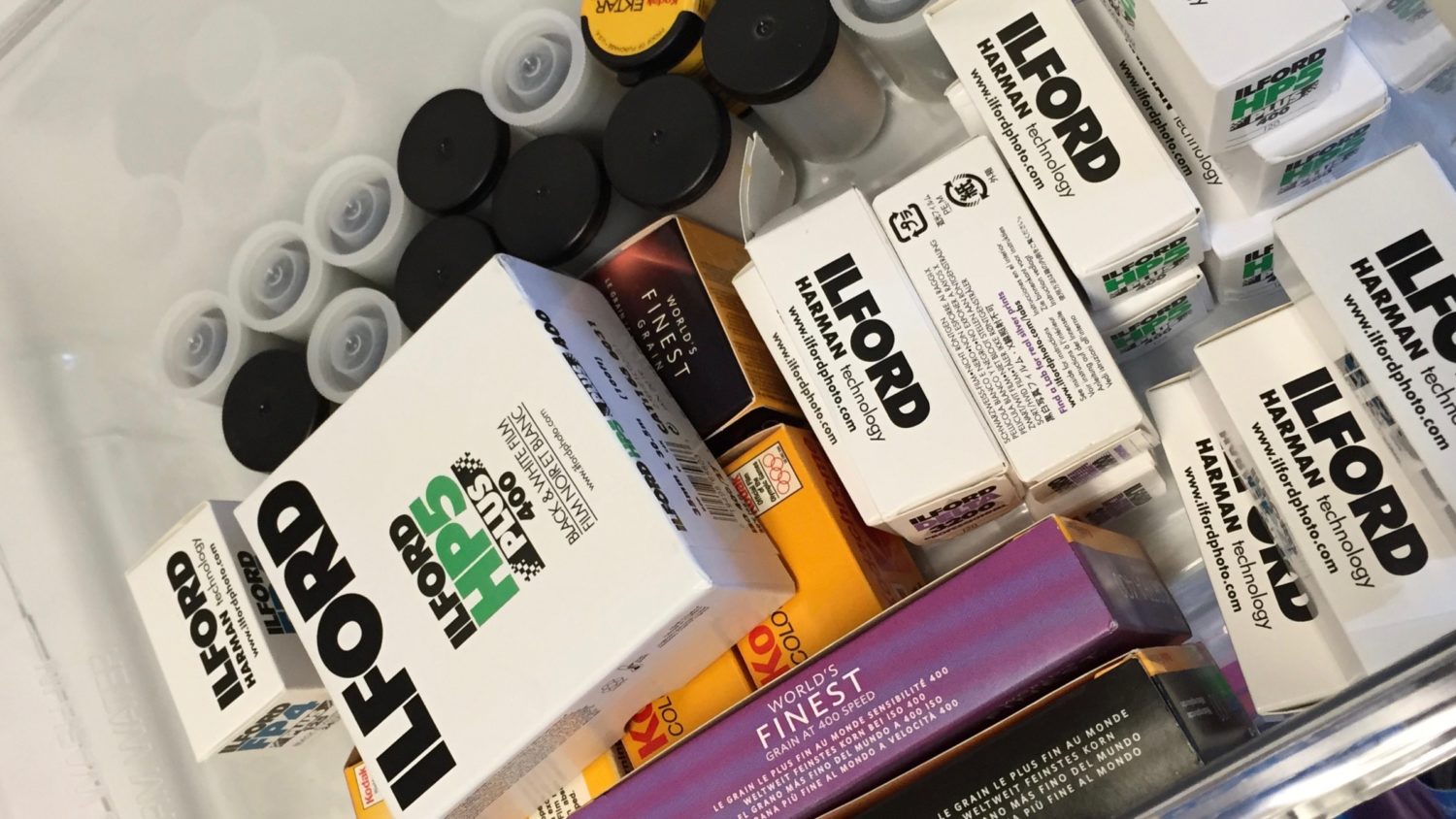
There’s one problem with this logic— it’s based on a fundamental misunderstanding of the medium itself. If we’re able to divorce ourselves from the stereotypes, and approach film with an open mind, what we undoubtably will find is that, just as with so many things in photography, film is just a tool that is neither good nor bad, but rather another option that can exist alongside digital. When used properly, film is capable of absolutely amazing results, but it does have certain limitations. The trick to getting good results out of film is truly understanding what you’re doing. So, if it is harder to work with why do I bother?

I keep my film in a lower drawer in my refrigerator. Right now I have a lot of Ilford HP5, some Kodak Portra, Ilford FP4, and Kodak Ektar.
Shooting film usually means keeping a stockpile.

I wish I could, in good conscious, tell you that I just can’t get “that film look” on digital, but that would be a bit of a stretch. I started shooting film to prove something to myself. To me, it was more of a test than anything. Was I good enough to do it like they did in the “old days”? That was eight years ago, and the truth is I still haven’t answered that question.

I keep shooting film for a less than logical reason, I shoot film because I enjoy the process. Not knowing what I’m getting, not being able to just peek at the back screen to check my exposure. I like having to plan my shoots in advance, having to make decisions about what films to take with and having to work around that. And I like the ritual of developing and scanning the film.

Band photography using my Bronica ETRSi with Ilford Delta 3200
Bronica ETRSi with Ilford Delta 3200.

Do I think I produce better work on film? Yes I believe I do, but I think that has more to do with the extra effort I have to put into it, not just because it’s film. And working with film feels like I’m creating something more tangible. There is a realism to film, having a negative is more real than a RAW file. It’s about creating something more than zeros and ones. There are some technical reasons too, but that’s a subject for another day.

Film is a choice of process, making the decision to do things the hard way, when you don’t have to. And, most importantly, to make the choice to keep history alive, and master the medium so you can pass it on to the next generation. Analog photography deserves to be more than just a footnote in the history of photography, more than “well, this is what they had to do before digital.” Film is not dead, and as long as there are photographers willing to work harder, it never will be.


If you’re interested in getting started with film, KEH Camera (affiliate link) is a great place to snag a cheap camera and stock up on film. If you buy something through my affiliate links, I may earn a small commission.


Why I Still Shoot Film Read More »

I Was There: June Gallery at CSPS

I Was There gallery opening at CSPS in Cedar Rapids, Iowa

Installation in CSPS Hall’s Commons Gallery

I Was There gallery opening at CSPS in Cedar Rapids, IowaThis year has been full of surprises, and they just keep coming. I had my first gallery show, was on NPR, started a podcast, and now I have another gallery installation. If you missed my first show, you now have a second chance to see it! I am honored that CSPS asked to hang some of my work in their Commons Gallery for the month of June. The show opens 6/7 and will run through the end of the month. The installation is a curated selection from the original “I Was There” gallery I had in RAYGUN. It’s wonderful to see another Cedar Rapids staple committing space to support our growing and thriving music scene. As always my hope is that my work will help bring awareness and spark interest in local music.


The Gallery will be available during normal business hours.
Mon – Sat 10-6
Sun 12-4

I Was There: June Gallery at CSPS Read More »

319 Creates First Episode

319 Creates Episode 1: Levi Zinser, Cedar Rapids, Iowa musician


319 Creates, a podcast.

319 Creates is a new podcast that I’ve started to highlight art and music in eastern Iowa. I’ll be talking with artists, musicians, and local businesses about what they bring to the area and how we all work together to make eastern Iowa a bit more interesting. I’ll be releasing new episodes every other Monday. If you want to be on or want to suggest someone, let me know!

319 Creates Episode 1: Levi Zinser, Cedar Rapids, Iowa musician

Levi Zinser, Episode 1

Levi is a Cedar Rapids based musician and photographer. He started making music in high school when he formed Zolgen with a few of his classmates. He’s been in a number of different projects since then, including his solo career. We talked about what it was like writing music in high school with his band, and how that process changed in his other projects and his solo work. Levi released his pivotal album in 2015, Speechless. After releasing this album he removed the bulk of his previous work from the internet because he wanted Speechless to be the jumping off point. We discussed his motivation and why he feels everything before that wasn’t good enough. We talked about the role of open mics in both of our development as artists, and how he would sculpt his music to suit both a full release as well as open mics.

Levi’s music can be found on his Bandcamp and you can follow him on Facebook.

Podcast Transcription

Mike Weber: Hi everyone. I’m Mike Weber, and welcome to the first episode of 319 Creates. This podcast will feature musicians, artists, and other creators from Eastern Iowa. Together we will explore different creative processes and discover how all of us work together to make Eastern Iowa a little bit more interesting.

My first guest is a close friend of mine, Levi Zinzer. Levi has been making music for over a decade, and he’s also an avid analog photographer. We will be discussing his early history as a musician and how open mics have helped shaped both of us as artists. I hope you enjoy.

Hello, Levi.

Levi Zinser: Hello there. Thanks for having me on, especially on your first episode. 

Mike Weber: Thank you for being here. So, Levi, you’ve been doing music since 2002. You want to walk us through some of the stuff that you’ve done over the years? 

Levi Zinser: Ah, yeah, so when I started, I kind of jumped in, head deep. 2002, it must have been. It was towards the end of the year.

It was getting cold. And, there was a guitar laying around the house. It was my father’s and I kind of barely could play, you know, like, not really. And, a friend of mine I went to school with was like, “Hey, you know, this magazine I read… They’re having a songwriting contest. And we should throw it in there because no one else is going to. There’s not going to be many people that play music that are going to be doing this.” I’m like, okay, cool. You know, Windows 98 sound recorder – it was tape deck and Windows 98. Both were involved. Windows 98 and cassette. So we sent it off. No one cared. We put together a proper band – a bass player, drummer, me on guitar, him singing. And by then this guy was long gone because he was kinda like a low rent Fred Durst, for lack of a better term.

And so us guys were really players, you know. And we’re all learning, got together, and by the time that was all done, money came out of it. And we’re like, well, we probably should stick with this name because the internet knows us. And it kind of just went on from there for the next five years.

Mike Weber: So you did that mostly during high school, it sounds like. Did you guys stay together post high school? Did you start doing shows? What happened after that? 

Levi Zinser: Post high school, it got kind of… So core wise, lineup wise, it was with that lineup, what I call the classic Zolgen lineup. Myself on guitar and vocals. There was Alex Khan on bass. He is a brilliant bass player and by the way, good harmonica player now. Really good. And guitar player, I think too. He’s a really good musician. And Justin Schultz on drums. And he was a great arranger of songs. So I would come up with riffs and ideas and he could really arrange and put stuff in order really well. And he’s kind of getting back into the music thing. He’s more of a keyboard player now. He has a lot of great ideas. He’s a really creative person and lyrically, he’s brilliant.

So we had that line up. And then Alex left for a bit, and Matt Nelson came in, and we wrote some of the songs here. I’m sure you’re at some point going to talk about “Speechless”. And we wrote some of the stuff that went on that because he was real enthusiastic player and him and I got on really well.

And then Matt left and Alex came back. Then we went on and did the Caustic Silence thing, which you might talk about. Or not. But after high school, it really kind of, we kinda hit that high point. When you’re a high school band, you hit that high point of like – we play the talent show, we went out, we know these people, that people, this house party. You kind of hit the high point of like, “Whoa, what now?”

And you’re trying to be adults. You get girlfriends and stuff and people get weird about that. When you’re a teenager, it’s hard to manage time. And we kind of let it go. And we also had a lot of creative differences because I was very much really heavy and really in the old school punkish thrash, British heavy metal. Justin (he and I were writing most of songs) was really getting into the psychedelic stuff. Hendrix and some of them are bluesy stuff, which is fine. And Alex was just the glue that held us together and kept us from beating the hell out of each other.

Mike Weber: So then moving on from Zolgen, what was the next step for you as a musician? Did you instantly dive into recording your own music or did you have other projects that you worked with other people? 

Levi Zinser: Yeah, actually there was this period with that band where not a lot was happening and I was friends with this other guy. And I think you and I may have had conversations about Connor. He was just learning drums, could play guitar too. But he was real enthusiastic, had a lot of ideas. We just got together to hang out and jam. We did that, put some stuff on tape, and that was it. It must have been August of 2005 we got together again and we put together “Basement Blues”, which was like a demo. And our idea was – I was going to play bass guitar. He’s going to play drums. We’ll split vocals, and we’ll put a band together around this, you know?

It never happened, but that was my first go outside of the people I knew and then also in school. I played with a couple other people that never panned out. What started me recording on my own was recording ideas for the band because usually it was not stuff you would want to listen to. Just like a rough draft on tape or on an MP3 and listening and learning it or dissecting and throwing it away. And that grew into me and the other creative head of this band not agreeing on stuff. I thought we should just record this stuff. He didn’t agree. And it kind of spiraled from there on that. Also, you talk about other projects… Forgotten, with Stubby Webb. Great singer, very creative person. She’s brilliant, and she’s a great artist too. We did that for a long time, but that was also five or six years after what we’re talking about.

Mike Weber: So how do you feel that your solo material differentiates from Zolgen? You mentioned that the creative heads of the band were you and Justin Schultz, correct? 

Levi Zinser: Yup. Yeah. 

Mike Weber: How do you feel that your solo material is different from what you were doing with Zolgen now that you didn’t have to kind of play that back and forth with Justin?

Levi Zinser: Well, there was a big change, which was really interesting to me, and I still don’t understand it. What really got me fired up was the whole British metal thing that happened eight years before I was born. Which is fine. I think people should be inspired by things that happened before them. If that’s what you’re into, that’s cool. But, I was very much trying to emulate that. I was kinda stuck in that – I was playing that way and in that vibe and wanting to take that further.

It was weird because as I got older, and was living on my own, I almost discovered the whole singer songwriter thing without knowing what it was. A song like “Monster”, I can tell you when I wrote it, what I was feeling when I wrote it. I got paid to write it because I was writing it at work. That’s really kind of where I hit this wall. It’s hard to do the metal band or hardcore thing when you’re 19 years old. At least it was for me, that’d be like 10-11 years ago. It seemed like I didn’t know anybody or anywhere to go do that and have an outlet.

To me it seemed impossible. It was like, okay, at least write these acoustic songs and talk about these things that you’re feeling now that you have to deal with adult shit. It’s easy when you’re a kid to be like, I’m mad – heavy, you know? But as you get to be an adult and you have to pay some bills and have relationships, you have to deal with adult problems. Like maybe me and my live-in are going to break up, this is kind of bad and there’s money involved and sex. I needed to kind of break away from this, like the kill, kill, kill to like, no, we actually have to think about this before we kill, kill, kill.

Mike Weber: So then with your solo material, when did you actually start playing live or was it always just releasing stuff online or CDs? Cassettes? How did that play out for you? 

Levi Zinser: It may be, again, just me being naive. There was really no online back 10 years ago, 2008 I mean. There was SoundCloud maybe in 2010. But yeah, it was really a lot of people who followed the Zolgen band and my friends. I’m going to cook a CD up, write on it with a Sharpie, print out something on the laser jet and hand it to him.

And you know, there was a time when cassettes, probably 2003-2007, had some validity and passed down and people still have boom boxes and stereos with the two cassette things.

But later on when I would do cassettes, it wasn’t so much like you do a CD to like give to everybody. You do a cassette to give to your musician friends to get their thoughts on your ideas.

Because this is an idea, a rough draft song. Should I do this or do I just shut up and move on? And that’s where that was then.

Mike Weber: So cassettes were more of a personal touch. Then CDs were the thing you hit go, spit it out, and then you can give that to everybody.

But when you were working with something that you wanted to get some feedback on, doing a cassette was something that took a little bit more work and then it had a bit more meaning behind it. Or am I digging too far here?

Levi Zinser: Well, yes and no. In the early days of doing band stuff everything went to tape and then it got moved over to CD and it was accepted that this could be a finished band song. It sounds very cassette-ish. It sounds as you would hear it sitting next to the band.

I think when it came to recording and computers came along to do that, you could record something, really polish it off. Whereas if you threw something cause you’re again at that point in recording now on a computer, but porting it to tape instead of burning it. You had more leeway on tape. If I gave you a tape back then it’d be like, “Hey, here’s some ideas. Here’s the tape, what do you think?” Whereas if I gave you the CD, it’s like: this is the record. This is the finished product. It was a different connotation.

Yeah. So definitely, it’s probably a personal thing.

Mike Weber: That makes sense. So the thought behind the cassette was more that this is a work in progress. It’s like handing someone a handwritten note versus something that you print it off of a printer. 

Levi Zinser: Yeah, I think the thing that most younger people won’t realize is that every stereo that had a CD player also had tape decks back then. CDs then had a higher cost than to buy three cassette tapes at Dollar General for a dollar.

Mike Weber: I remember being in high school and out of my circle of friends, I was the only one that had a computer that was capable of burning a disc. And that was just because I built the computer myself and specifically went out of my way and spent the money to have that capability.

I remember when everybody was walking around with a Walkman. I totally understand how in the early to mid 2000s, the thought of handing someone a disc was something more significant than just a mix tape.

Moving forward from cassettes, to CDs, to eventually posting stuff online. As we’ve been talking about doing this, I noticed that you’ve pulled a lot of your older material off of your online presence. You want to talk about your reasoning behind that?

Levi Zinser: Absolutely, but I want to choose the right word for this. I know personally you’re a photographer and maybe it’s just me, but I think you have a certain nostalgia or connection, like the first time you had a really good shot or a really good song like you know that was really good and you have a connection to it.

At least I did. Maybe I’m nostalgic and I look back and I think a lot of that’s because I look back at the time with the old material, like the friends and the times we had to get to that. But what you’re talking about happened in late 2015. I made an active decision with “Speechless” to take down the older stuff.

I don’t think I’m a great singer. I can sing not that good, but I made a decision. I am a better instrumentalist and didn’t want to cling to things that happened in 2006 because that’s nine years ago. It’s okay, I think, to revisit that material and those songs, which I did very much. “Speechless” to me is one of those pieces. It’s like, how could I really ever do better than this? I’ve had my life’s work of material and the time to think about it and the time to do it right. How do I build on this? Maybe the answer is out there, but for me this is as good as it’s going to get and this other stuff needs to go because I don’t want someone to hear it. So a song I’m very proud of like, “Wallsend” or “Reckoning Vengeance” you hear on the album “Speechless”.

Or even if you look at “Epilogue” or “Society”, very proud of how that went down. Or “Electric Angel”. I don’t want someone to hear that and hear me at my best. And then go back and hear “Invasion” back in 2006 and have people think “What the hell were you doing?” Or, “You missed the note by half a step”. Especially when I look at “Aces and Eights”. I don’t know if you’ve thought about this, but when I made “Aces and Eights”, I felt the same as I had felt with “Speechless”. I thought I really did something here and I look back on “Aces and Eights”, which I invested a lot of fucking time in, and it just feels like, “Why do I want to expose this when I have this shining star?”

Mike Weber: I can understand where you’re coming from, but at the same time, I look at the world as a whole in regards to music, and it seems like every popular musician, especially a lot of times after they die, there’s this push to release the demos, the unreleased.

And so to me that is another thing in and of itself. But like a band that I know both of us really enjoy, Pink Floyd. What if David Gilmore and Roger Waters decide “The Wall” is the best thing they’ve ever done? So everybody out there who likes “Metal” and “Piper at the Gates of Dawn” – too bad we’re pulling it off the shelves. No one’s ever going to get it again. So the copies that are out there in the wild, you have to go hunt it down. From the standpoint of a consumer of music, it seems almost selfish to pull that material off the shelf. I know there are a lot of people who like music, like seeing the progression that I don’t think they’re necessarily going to listen to something like “Aces and Eights” and think negatively. I think they’re more going to look at it as the journey that you’ve gone through as an artist. And especially going even further back to the Zolgen stuff when you were still a kid and you were still learning how to put together music. 

Like as a photographer, I recently did a show of, not even my entire body of work, but just the last eight years of my live music photography. And I look back at stuff that was taken in 2009-2010. At that point in my personal career as a photographer, I had already been doing photography at that point for five and a half years. And I look at the stuff that I did then, and I’m like, you know, this is really bad.

But I still have stuff online from 2006-2008. And I had stuff from 2009 that I put in a show. I mean, it was “remastered”. I re-edited it. I went back to the original RAW file and I cleaned it up from the way that I had edited it back then.

But I think there’s a certain amount of censoring that, as artists, we like to do to our own material.

Levi Zinser: Absolutely.

Mike Weber: We’re trying to curate the image of who we are. As much as we are prone to wanting to do that, I think it’s really important that we leave an accurate representation of what we have done over the years.

Because eventually I would like to think that all of us will have somebody come back and look at our material down the road. Be it a fan, a significant other, a family member, a child, a grandchild, great grandchild if we’re super lucky, come back and are trying to piece together our progression as an artist.

I think it’s important to try and maintain the continuity of what we have done. So tying into that a little bit. I know that when I had met you in 2009…

Levi Zinser: It’s been that long ago? 

Mike Weber: It’s been that long. I can’t remember exactly, but I know you were doing open mics when I met you. I don’t know when that started in relationship to when we met. The open mics I started shooting, which was also a big pivotal moment in my artistic career because that was the first time that I shot live music. So why don’t you talk a little bit about how you got into shooting open mics? When did that start? 

Levi Zinser:  Playing. You were shooting; I was playing. No, no, that’s great. I think it’s something we’ve never really discussed.

I was doing my own shit for a long time. And my live-in at the time said I should probably go out. Obviously some of my songs aren’t palatable. You can’t take something that’s really heavy and go out and knock it out on the acoustic guitar. If it’s riff driven, some will work, but most won’t. Some songs I was getting into at that point were written on our couch on an acoustic guitar and it sounded good then. And then you go out and do all the overdubs and it just sounds better. But at the base of it, you have a good song. No matter if it’s just you playing it with an acoustic or all of the overdubs and the fancy shit.

Someone told me about Cocktails and I think Justin was a dude that was running it then, but he was there doing that and I just put together that archtop I have. I wanted to go out and just play some songs. I wanted to do “Monster”. I wanted to do, “Feeling Yellow”.

Oh man, “Can’t You See the End”, which is an old ass song. It’s probably one of the oldest ones in my pocket. I just went and did it and it was really good. And then like a typical over-confident 20 something, my dumb ass went to all my coworkers and invited them. Like, now I’m going to go and plug my electric with humbuckers into their damn PA and play every goddamn thing I know that doesn’t require multiple parts. And that’s the thing you were at.

Mike Weber: Right. Yeah. 

Levi Zinser: And I think my grandma, my grandfather was at, my folks were at. My work friends. 

Mike Weber: I don’t remember if it was the first one that I was at, but there was one of the first couple that I went to where we showed up with an entourage. 

Levi Zinser: Yeah. That was the second time I played there and it was a couple of our coworkers, my folks, my friends, my aunt, and my girlfriend at the time. It was an entourage and we kind of took over the place. Everyone was like, “Oh, what? This is weird. Who is this guy?“

Mike Weber: Yeah. I specifically remember your parents, your grandfather, I think you had two other family members. I was there along with at least three other people from the place that we worked at, which shall remain nameless for the sake of this podcast. But I personally remember that was one of the first open mics I took photos at.

I feel like it was the second one, but I remember both of those very clearly because as a 20 something (we were 21 at the time) that was really my first experience with live music in that type of situation. I had been to community events where there was a stage and people were playing, but it was the first time that I was at something specifically driven for the purpose of musicians playing music live.

And I remember being very taken aback by it and being like…

Levi Zinser: Yeah.

Mike Weber: I get this. I understand what is cool about seeing a musician play live. I remember when I was younger, any time I had the opportunity to see the bands I liked live and I always thought, “I’m going to pay all this money and I’m not going to get close to the stage and it’s going to be silly.” But when I started going to things and actually seeing musicians play live, that it’s not about necessarily the way it sounds live, and it’s not about being able to be right up in front. It’s about all the different pieces that work together, the experience that it creates and being in an environment that is conducive to the arts and creativity. For me, the big thing was going to the open mics. For some of the performers, the ones that were doing original music, I’m hearing music that I have literally never heard before in my life, played by the person who wrote it. And I am standing, you know, half a dozen paces back. 

Levi Zinser: Yeah. You’re eight feet away from the originator. 

Mike Weber: And some of the times, these are the first times that these scores have ever been heard by anybody aside the performer and maybe their significant other. So all of those things were very impactful for me as a young artist who is at the time and arguably even still today, just getting his footing in his own creative field. I found it very inspiring. 

Levi Zinser: Yeah, it was an interesting time. It was one of two times in my life that was very interpersonally chaotic, and that was the calm before the storm. You know, kind of finding that and getting into that groove. And obviously if no one’s figured it out by now, we’ve known each other for years, we’ve said it a few times, but that was the calm before the storm. So that’s what made that period interesting. And that’s what made everything that came after it really kind of weird. 

Mike Weber: So, I’m going to stop us here for a second, because I feel like this is a good opportunity for us to take a break and listen to you play “Monster”.

Levi Zinser: I’d be down for that. 

 (Levi plays Monster. You can hear his recently re-worked instrumental version of this song here.)

Mike Weber: Every time that you play that I feel like it sounds a little different. 

Levi Zinser: Well, that time I, what was it in the last chorus? I just boondoggled that D just dropped it like a buck up. 

Mike Weber: Oh, that’s not exactly what I was talking about, but alright. 

Levi Zinser: No, I digress. Every time I play that I do put a different attitude into it. It has a certain satire to it. It’s very much, it’s a satirical point of view of things going on then. 

Mike Weber: So I’m going to kind of segue. This is kind of related to “Monster”, but not really. I’ve heard a lot of your music over the years, and I’ve heard a lot of different versions of it. I know that you have different sets of equipment that you use in different circumstances. Why don’t you talk a little bit about how you feel your different pieces of equipment lend to different sounds. And how you change your music that you might record at home on electric that you end up playing acoustic when you do open mics and things like that. How does all that influence you as an artist?

Levi Zinser: My first guitar I ever owned myself, that wasn’t borrowed from my dad, was a Gibson with P90s in it. It was basically the Les Paul Special, and they called it the faded double cut, because, you know, marketing. I was playing heavy music early on and I put P100s in it, which are two single coils stacked. That gives you a little bit more muffled, darker… Like jazz players, according to the internet, love P100s, because they want that darker, smoky, kind of muted sound. But I just wanted to kick ass and take names with heavy fucking riffs.

So I used those, but that was the guitar, because I really had two guitars. The other one I have, which I use mainly, can be seen on the cover of “Speechless”, which you shot. That guitar is running really hot ceramic humbuckers, which I know is totally jargon, but you don’t want to plug those into a PA. They’re really aggressive. Most of it came out on P90 stuff and  clean playing through tube amps. The P100 / P90 sound… I guess for those of you out there who maybe have heard a single coil, especially the Gibson like P90s. A P100 is basically like your P90 at seven or eight on tone and a little fatter on the bottom end.

So I was playing really clean stuff, especially being younger, on solid state amps in apartments. That kind of affected my sound. One of the main pieces of equipment that I’ve played on through all the years is a 1973 or ’74 (parts of it ’73, parts of a ’74, somewhere assembled in there) Aims dual 12″. I don’t think there’s a lot of those around from what I’ve found. And mine’s all virgin. The glass is all the original glass that was in it. That is a very honest amp. If you fuck up, there is no mercy. As you know, it is a very warm and for lack of a better term, detail oriented. There’s a lot of headspace, so if you fuck up somewhere in there, you better hope your recorder didn’t catch it because the goddamn amp did. And it gets even more brutal when you play behind distortion. I mean, you have to play like a laser and I don’t. If you make a serious mistake, it will point it out because it has so much headspace.

I feel so much room that it points those out. So I think it definitely made me a different player. I feel like I’ve always played more aggressively. I don’t know why. Maybe because, and something we haven’t talked about is I’m left handed, but I’m playing a right hand guitar. I have terrible coordination in my right hand. My left hand is pretty normal. When I play and pick, I am very aggressive and I think that has also affected my sound. This could be completely off topic, but that’s affected my sound. You’ve heard a lot of it and probably heard stuff that no one else has, demos and rough mixes. If you listen to my stuff, you can hear it’s me from the angle of attack on my pick and the way I play.

I guess I totally subverted your question. My apologies. Going back to what you wanted, for making it open mic palatable. Yes. It did. The idea that I have to make the song recordable, so it’s like a song with guitars and drums and a bassline, but I also have to make it something I can go out with an acoustic and play.

That was definitely my mindset. It’s something I had in my mind in 2008 to 2012, maybe even ’13 but there was definitely a period where when I wrote a song that was on top of the mind of. This has to be palatable. I can’t just make this overdub city and never reproduce it again.

Mike Weber: So one of the interesting things that I’ve noticed over the years, not specific to your work, but there is a big difference as far as what I saw musicians doing here in Cedar Rapids at the open mics, like at Cocktails and Bricks versus what they were doing down in Iowa City. I observed this going out to the open mics with you and later when I was going to the open mics in Iowa City, which started about this time in 2015. The reason I’m talking about this right now is talking about how having to make the music palatable and how it can convert to a one man, one guitar situation. What we saw in Iowa City was actually very different. Here, almost every person going up on stage was one guy, acoustic guitar. Occasionally we would see someone bring in an electric, but they would just play with like a small amp and play clean. Whereas when I started doing the open mic in Iowa City, it was very, very frequently – half to three quarters, more than that on some nights, all of the people going up were not individuals. They were either fully formed bands or just a group of people – it was a rotating cast of characters. They would go up and now he’s playing guitar or he’s playing bass, or they’re on drums. They were friends and they would work together so they could have these fully formed songs and still play them in the venue of an open mic and have it be palatable to an audience.

And I wonder if you had that opportunity, is that something that you would have done? If you could have taken your songs that were fully written, that were designed for a three or four piece band, would you have? Do you think that you would have concerned yourself less with rewriting or writing your material in a way that it could be translated into an acoustic and focus more on just writing the material that you wanted to make? That was a long question. I’m sorry.

Levi Zinser: No, it’s okay. That’s really good. I have two answers to that. I think. Oh man, this is really a loaded answer on one side, and I understand that there are songs that are good because there’s multiple things going on and it has an orchestration, but at the core of every good song.. Let’s look at orchestrated songs, like one that people really remember is Toccata by Bach.

There’s a lot of shit going on there. But there’s a core melody there and maybe a bassline. So I think it almost made me a better songwriter, because you have to look at what the core of this is. You can’t think,  “I’m gonna play the solo here and the bass is going to play the bassline and the drummer is gonna have his little fill and we’re going to come back around.” It really made me focus more on the music itself. As to if I could have done that, then yeah, I absolutely think I would have. 

One weird thing, and maybe it’s just because I played starting off with an odd cast, to put it nicely, and that’s not to be condescending. We were all characters. I’m the biggest probably of them all. When Schultz and I were playing together, you have two big, big, big egos, and I don’t even know if ego is the right word. Ideas. Personalities. Creative concepts. Just really butting heads. That made me really protective of my stuff.

It’s like, “Hey man, this is my shit. I don’t trust anyone to not fuck it up more than I’ll fuck it up.” At the same time, I’m okay with someone coming out and playing laps around me. That’s fine. I’m not the greatest player in the world. Someone can come out and play laps around me, but, if they’re not servicing the song the way I saw it, and this is very ego, it makes me sound very self centered. And I think as artists we get that way. So that was part of it, but it is the connections I had then and the people I knew. Maybe it’s me being naive again or not knowing the right people, but it just felt like what I wanted to do with the music thing… If I wanted to find people who wanted to do that, it was, for lack of a better term, fucking impossible.

Mike Weber: But I think we’re going to call it here. And, we’re going to end this with another song from Levi. I think he is going to play us out with some “Backroads”. Does that sound about right? 

Levi Zinser: Yeah. We’ll play it out. 

Mike Weber: We’re going to play it out. Thank you for listening. And here is “Backroads” by Levi Zinser. Enjoy. 

You can find Levi online at zolgen.bandcamp.com and on Facebook. On our next episode, we will be talking to Amanda Bollinger about her art and how she incorporates recycled and repurposed items into it. We will also be discussing the upcoming Yewell Street Art Fair, which she is organizing.

Thank you for listening and hope you can join us next time.

319 Creates First Episode Read More »